Mar 02, 2024
Chris here. I drive "Lebowski," a 2-door Velocity Blue 2023 Ford Bronco Badlands Sasquatch. Lux package. 2.7L V6. Automatic transmission.

DDavis, Thesedays

Dirty Paws
BuckYeahMar 02, 2024
Rank IV
Lots O FordsMar 05, 2024
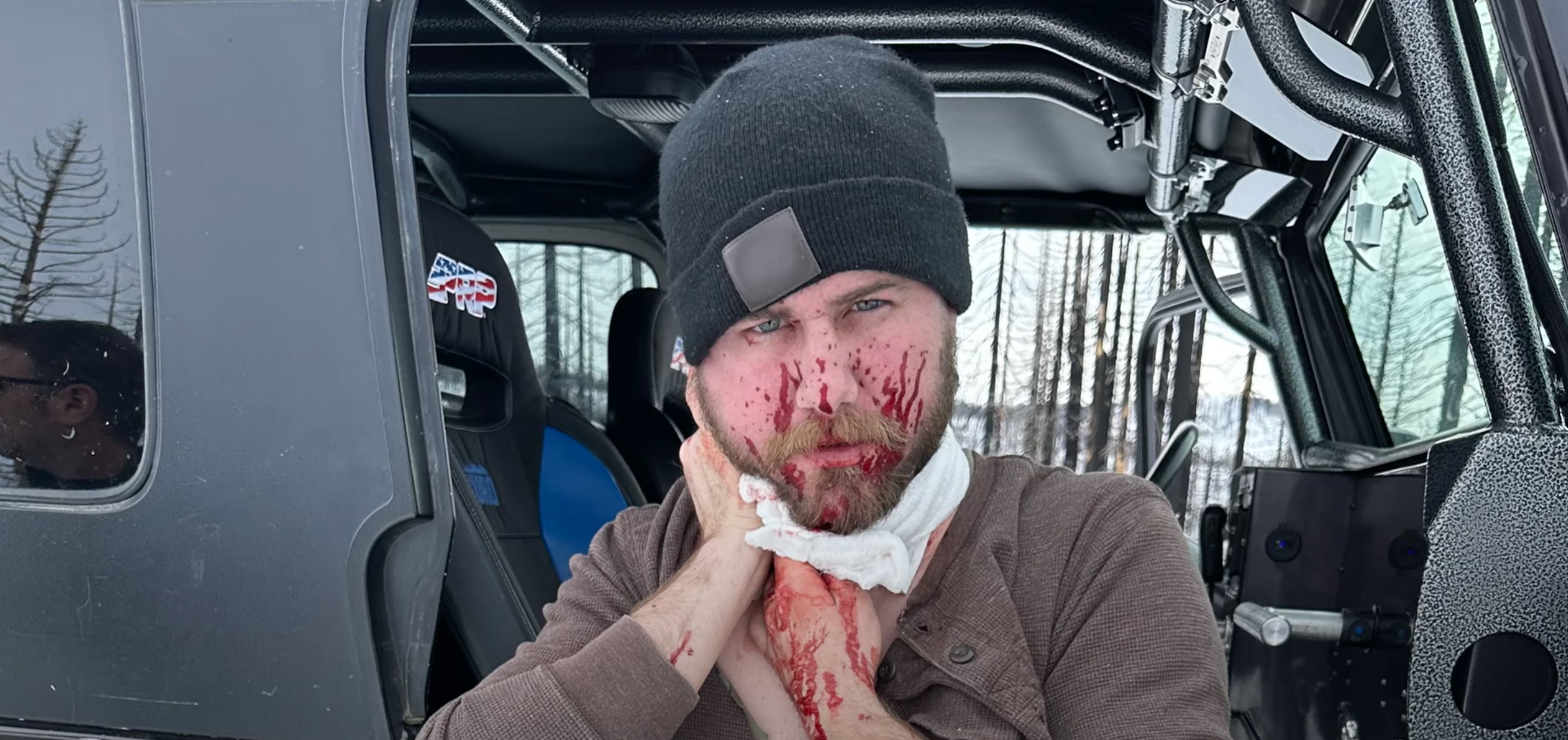
Yikes! Using a chain is REALLY old school. I've seen a number of broken winch cables back in the day and things can definitely get exciting there as well. I saw one case where it pulled the recovery point off the Jeep, and that recovery point flew clean through the Jeep that was doing the winching and nearly hit someone who was standing behind the Jeep thinking that was a safe place! It then hit a tree back there, and took a good sized chunk out of that tree! The triangle of death is a real thing! We used to also put up our hood to block the broken cable as well, but that can have a negative effect on visibility. BTW, we also always pulled everyone out of the the vehicle before winching. I think Caleb was lucky that it wasn't his passenger that was hit by the KRR.
Dirty Paws
BuckYeahMar 06, 2024
Yes they were both lucky. And we can all learn from the takeaways.
It's the story he gave that we'll remember. And that will make one stop and access.
Someone tells you to do A,B,c and you may forget.
Someone says I heard about this guy that was air evacuated because the rope went through the window.
Now I got your attention.
I trust the dirt
Roughstock11Mar 06, 2024
This isn't just a snow issue, in your case, it could have been sand he was stuck in as well. Keep in mind that any recovery gear, when misused or poor quality, can fail. In this example, if they had been using a strap and D-rings and the Jeep sent it the same way you would likely have had metal bits flying around which could have been even worse.
I think that the key learnings for me here are:
- Buy quality recovery gear. Yes it's more expensive, but what's your life worth?
- Take your time before EACH pull to take a look at the current situation. In general SLOW DOWN and don't rush through a recovery.
- Make sure you're using the right kind of recovery for the situation. In this case, a KRR might not have been the best solution. Again, it was picked because it was the quickest to rig.
- Rigging things "correctly" is important. Again, in this case a bridle on the front of the Bronco would have spread the load and might have avoided the damage to the frame horn.
- Make sure that the person is doing things in a way that you feel comfortable with. Caleb knew in his gut that the Jeep was being more aggressive than he felt comfortable with. Recommendations are you should use no more than 8-12 MPH with a KRR, and roll into the gas, not just floor it. But he didn't say anything. Which leads me to...
- Communication is critical. Again, in the rush to get caught up with the rest of his party, communications with the Jeep were limited.
- Emergency communications. This one, I have to say, I take a little different viewpoint on. I use a ZOLEO satellite communicator for emergency communications. There are others, like InReach, etc. that do similar things. I can't recommend them enough since, in my opinion, they are uucker, and more reliable in terms of getting help. Why if that HAM in the Jeep hadn't come along? They would have had to load him into another vehicle and drive him down the mountain. You can find ZOLEO at http://zoleo.com
- The reasons I use satellite communications for true emergencies instead of HAM or GMRS radios are:
- It will work anywhere you can see the sky, even HAM has its limitations when you get way out in the boonies.
- It has this SOS button that will send your GPS coordinates to their emergency center and they will then forward them to the appropriate emergency services agencies. So, it's a LOT less steps than using a radio. You just push a button, and if that's all your capable off, help will be on it's way.
- You also set up emergency contacts in ZOLEO. The emergency center will then contact that person to give them updates, etc. and they will get your the name right. :)
So, overall, really informative posting/video, so glad it turned out OK for him!
Dirty Paws
BuckYeahMar 06, 2024
I saw this as well, and one of the things that got me to thinking was the fact that not only did the soft shackle break, but he actually came very close to pulling the mount point out of the Bronco, as well as bending the frame horn! So, I did a little research on best practices for using a kinetic rope for recovery. Long story short several sources indicated that you should not just "floor it". 8-12 MPH seems to be the general consensus on the max speed. If you watch the video, that Jeep spooled up and then just sent it. Factor 55 puts out a great handbook on how to correctly perform a KRR recovery that I found very helpful. I found a copy here.
Rank IV
Lots O FordsMar 07, 2024
I saw this as well, and one of the things that got me to thinking was the fact that not only did the soft shackle break, but he actually came very close to pulling the mount point out of the Bronco, as well as bending the frame horn! So, I did a little research on best practices for using a kinetic rope for recovery. Long story short several sources indicated that you should not just "floor it". 8-12 MPH seems to be the general consensus on the max speed. If you watch the video, that Jeep spooled up and then just sent it. Factor 55 puts out a great handbook on how to correctly perform a KRR recovery that I found very helpful. I found a copy here.
That's a terrible idea, when do we start?
JoergHMar 07, 2024
I finally got to look at the booklet you posted. Very good information. Almost worth printing and keeping in the recovery bag.
Thanks for sharing.
Rank V
timhoodMar 07, 2024
You must log in or register to post here.