
For anyone who spends time off-roading or overlanding remote trails, preparation should go far beyond recovery gear and air compressors, yet it often doesn’t. When you’re deep in the backcountry, or even just a few hours from paved roads and out of the reach of the ambulance, basic first aid knowledge can make a real difference. One of the best ways to gain those skills is through a Wilderness First Aid certification, commonly known as WFA.
What Is Wilderness First Aid?
Wilderness First Aid is a specialized first aid course designed for people who spend time in remote environments where professional medical help may be hours away. Unlike standard first aid training, WFA focuses on improvisation, prolonged care, and decision-making in remote settings.
That makes it particularly valuable for off-roaders, overlanders, hikers, hunters, and anyone who regularly travels into areas where traditional emergency response isn’t immediately available.
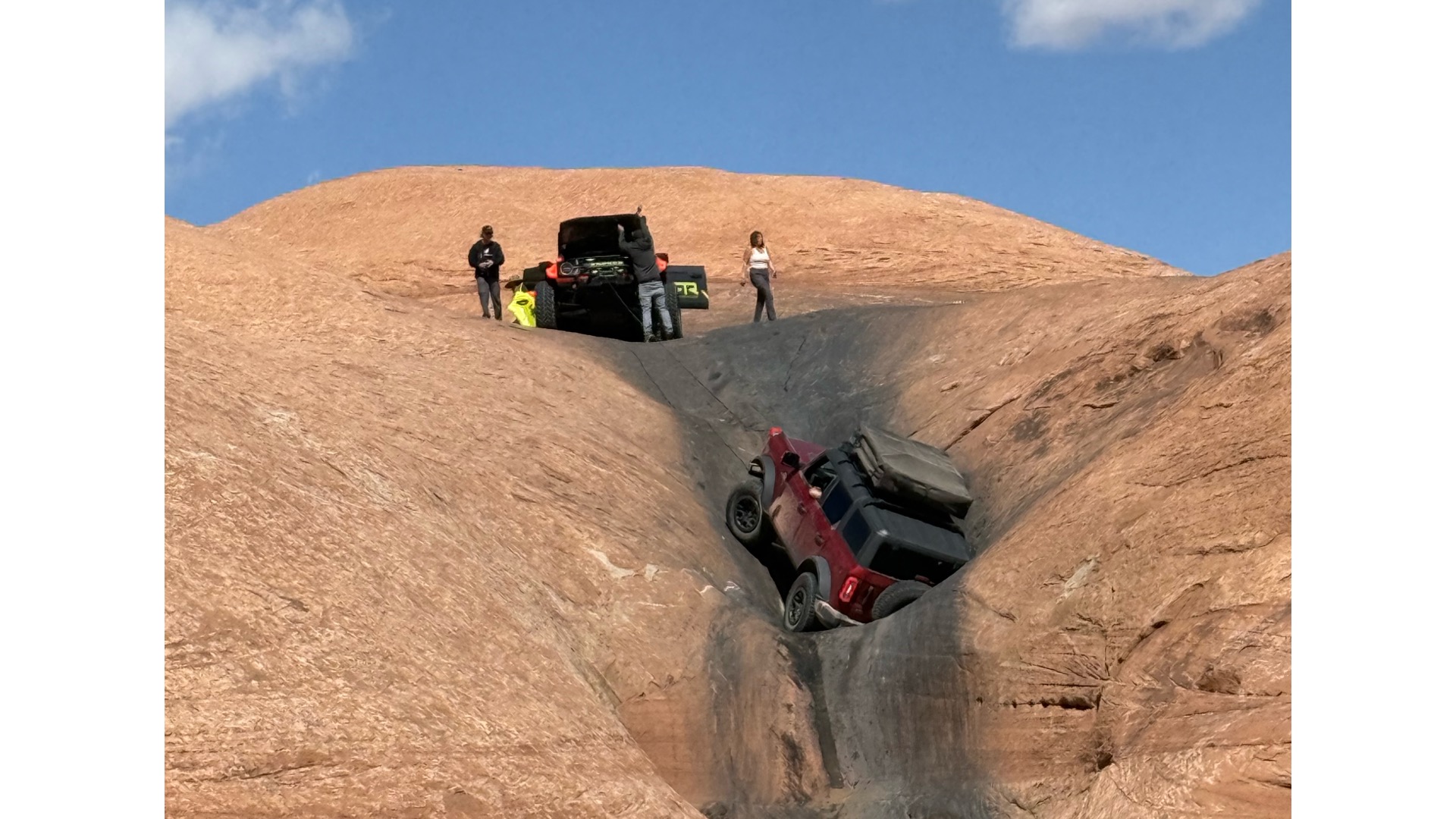
On many trails across the American West, whether you’re crawling through slickrock outside of Moab, exploring desert backroads in Nevada, or traveling over the mountain passes of Colorado, cell service may be spotty and access roads can be difficult or non-existent for rescue vehicles. Even having a Starlink does not equate a prompt rescue. In those situations, the people in your group are the first responders.
What the Training Looks Like
Most WFA certifications are earned through a two-day workshop totaling about 16 hours of training. These courses are frequently offered through outdoor education organizations and local colleges. There are also some online trainings, but I decided to take the in-person course. The format is intentionally interactive. While classroom lectures introduce the fundamentals, the real value comes from hands-on practice and real-world scenarios. Image walking outside and finding a person “down” and it’s up to you to figure out why and what to do next.
Participants typically learn how to:
- Conduct a structured patient assessment
- Recognize and respond to life-threatening injuries
- Treat bleeding, fractures, sprains, burns, and environmental injuries
- Manage hypothermia, heat illness, and dehydration
- Stabilize patients for extended care in remote locations
- Determine when evacuation is necessary
- Plan and coordinate safe evacuation strategies
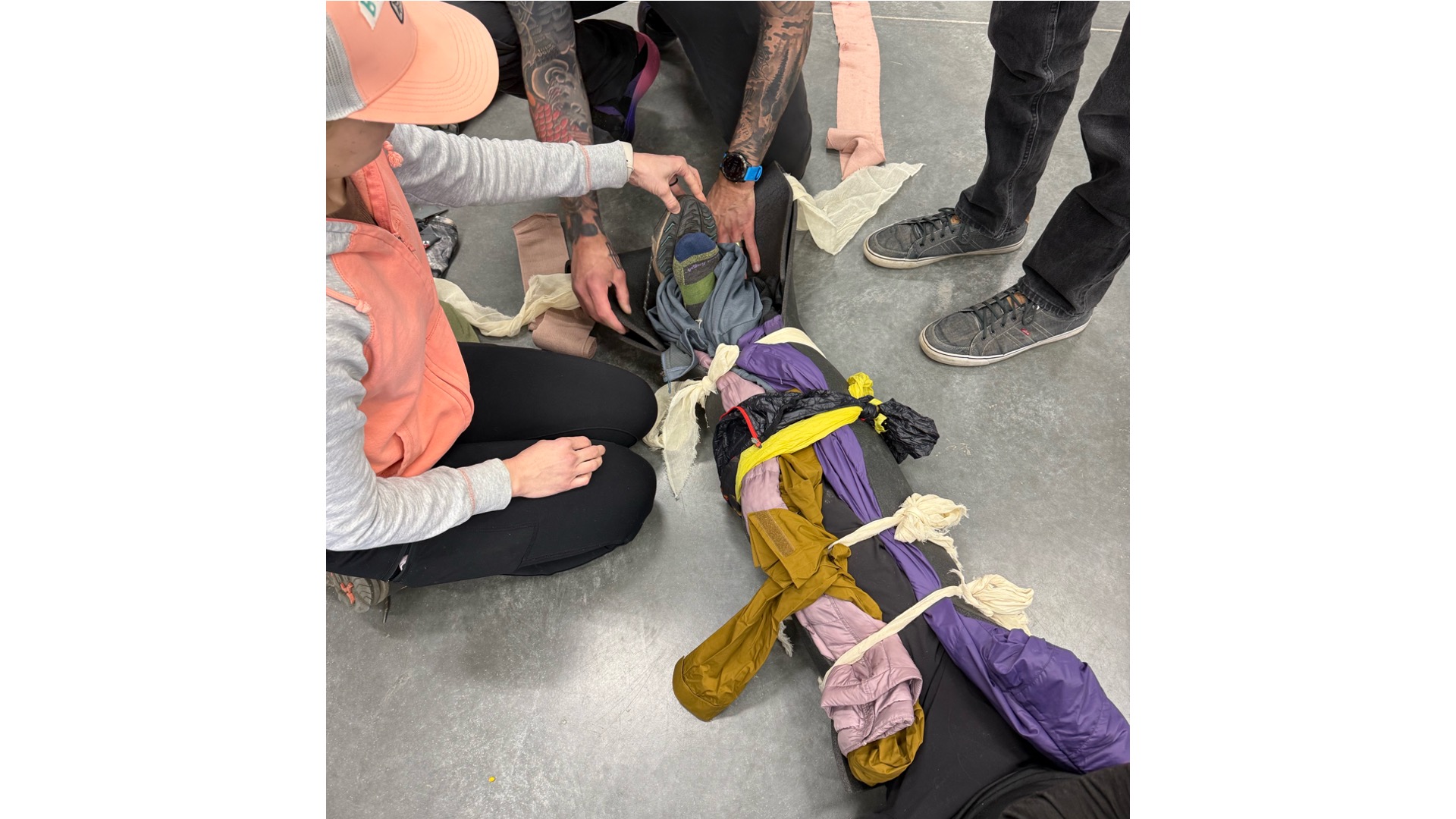
Our class of 18 spent time building splints, bandaging wounds, and managing simulated emergencies, skills that become much more memorable when you’ve actually done them rather than just heard about them. The one that got me was an unconscious, non-responsive patient and I was alone, with no cell service. The right response was to check for a pulse and breathing, assess for possible spinal injuries, place the patient in what’s called the “recovery” position, and leave to get help. The leaving part was the part I’d never considered but based on the situation, it gave the patient the best chance to survive.
Learning to Communicate with Search and Rescue
One element that also surprised me is how much emphasis is placed on communication during emergencies.
WFA courses teach how to prepare a clear radio or satellite communication report for search and rescue teams. Providing the right information: patient condition, location, mechanism of injury, and immediate care provided helps responders bring the right equipment and medical resources.
That kind of information can make a significant difference when responders are traveling long distances to reach a remote trail.
A Different Kind of Medicine
Even for people with medical backgrounds, wilderness medicine can be eye-opening.
As a nurse, I was surprised by how much I learned while earning my own WFA certification this past weekend. The type of care you provide in the field is very different from what we can do in a hospital. There’s no imaging, no lab work, and often very limited supplies. Instead, the focus shifts to assessment, stabilization, and problem-solving with what you have available.
It’s practical, realistic, and tailored for environments where help is likely hours away.
Why It Matters for Off-Roaders
Serious injuries on the trail are rare, but they do happen, I’ve been involved with some. Vehicle rollovers, fall accidents on rough trails, severe dehydration, and environmental exposure are all possibilities when traveling far from civilization.
Having someone in your group trained in Wilderness First Aid means you have someone who can:
- Quickly assess the situation
- Provide immediate stabilization
- Make informed decisions about evacuation
In the backcountry, those first decisions can make a significant difference, and in rare cases, they can save someone’s life.
Building a Better Trail First Aid Kit
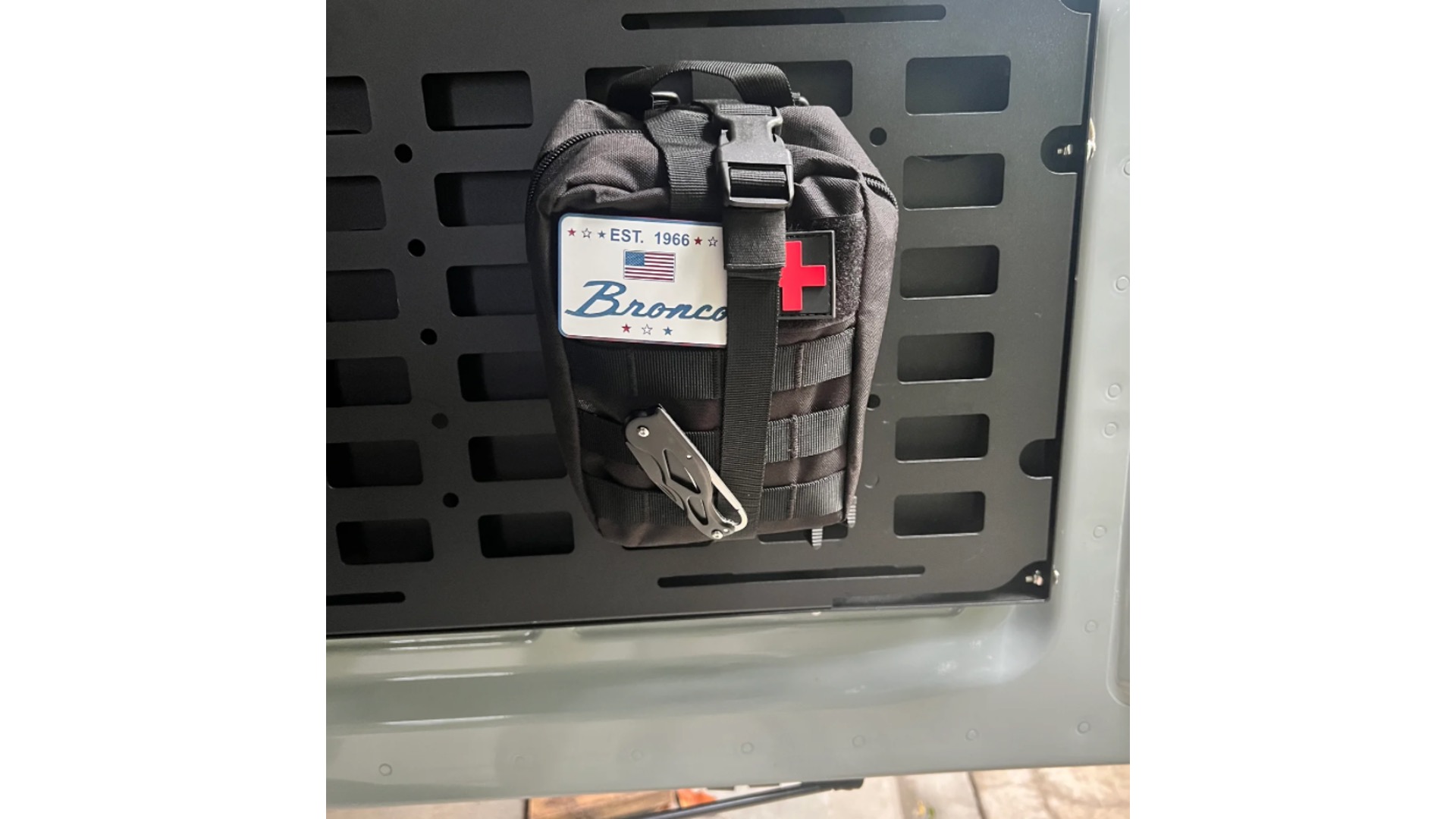
Even if formal WFA training isn’t for you, there are simple ways to be better prepared on the trail. Carrying a well-equipped first aid kit in your Bronco is one of them.
Below is an example of a good first aid kit that should be in your Bronco at all times:
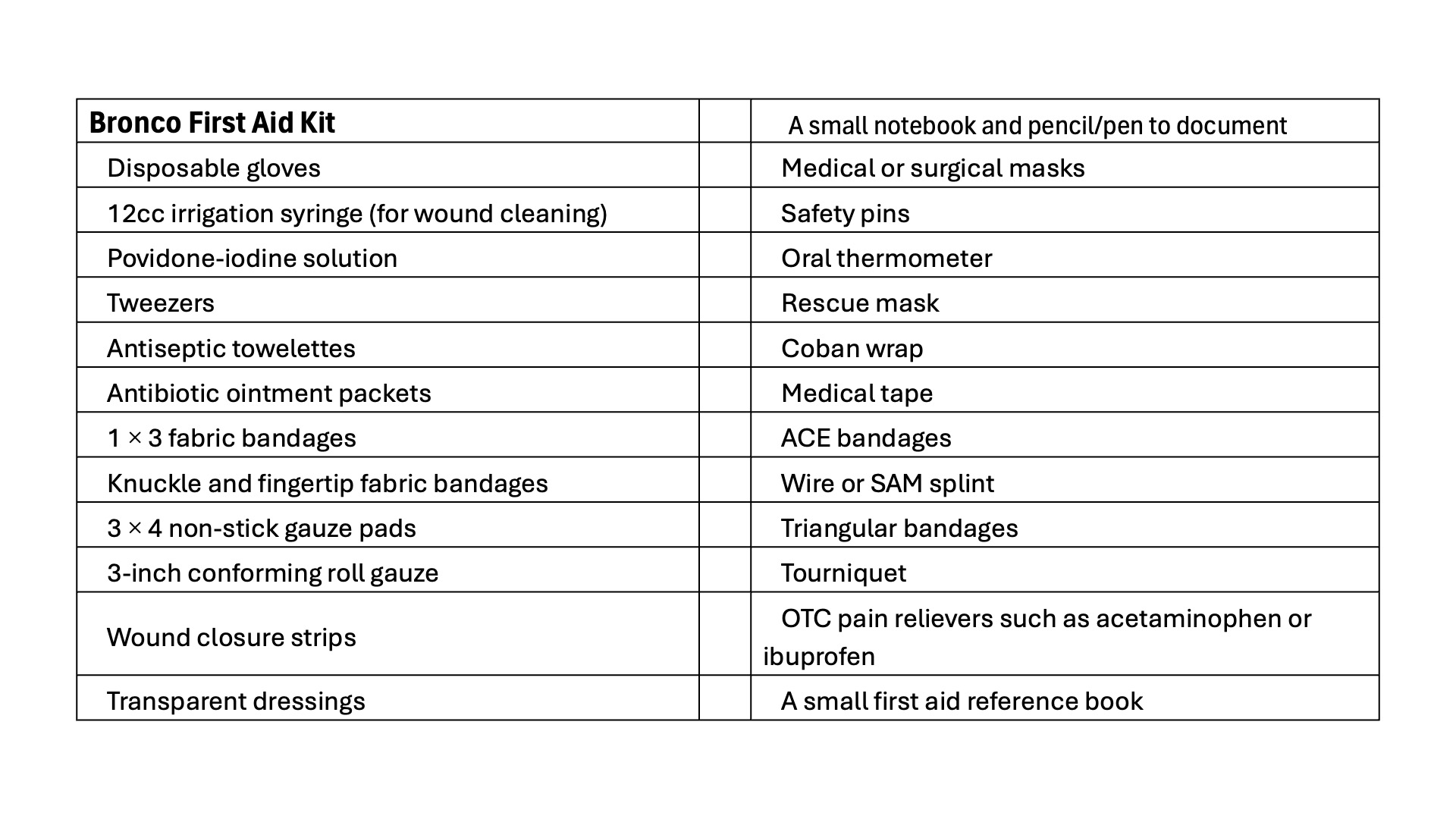
Many of these items take up very little space but can dramatically improve your ability to respond to injuries on the trail.
Preparedness Is Part of the Adventure
Off-roading is about exploring places that most people never see, and I treasure each and every opportunity to get out there. But those remote landscapes also come with unique responsibilities.
Recovery gear, radios, and navigation tools are all part of responsible trail travel. Adding medical preparedness to that list is just as important.
Whether you take the step to earn a Wilderness First Aid certification or simply upgrade the first aid kit in your Bronco, being prepared means you’re ready to take care of yourself, and the people wheeling with you, when it matters most.
Comments
You must log in or register to post here.