
If you’ve taken your Bronco off-road, you know that the skills are far more than just turning the wheel and stepping on the gas, it’s about reading terrain and understanding your vehicle. Whether you’re behind the wheel of a Bronco Sport Badlands or the highly capable Bronco Raptor, situational awareness and driving finesse can make the difference between an enjoyable ride and a trail mishap. Since we now own a Sport, a Bronco Badlands, and a brand spanking new Bronco Raptor, I was thinking about how differently they all handle off-road and all the considerations between them and thought I would share my thoughts in an article.
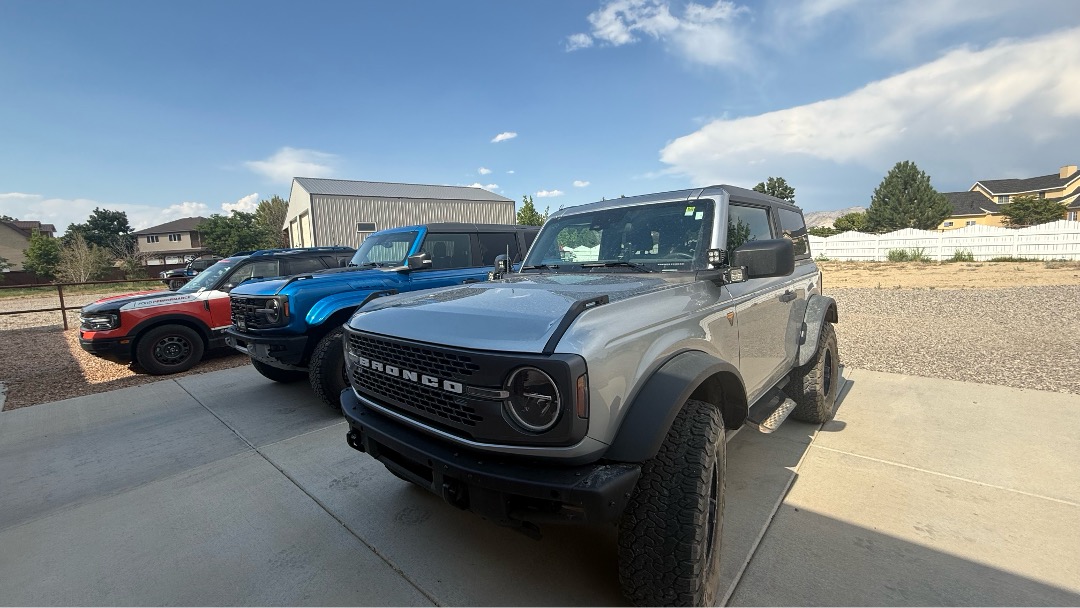
Spatial Awareness: Knowing Where Your Tires Are & More
One of the first and most essential skills in off-road driving is learning to "feel" where your tires are. This goes beyond looking out the window or staring at your onboard cameras, it’s an internalized sense of the vehicle’s footprint. In the Bronco Sport, with its shorter wheelbase and lower stance, this comes quickly. It's more car-like, and its dimensions are easier to visualize, even for beginners.
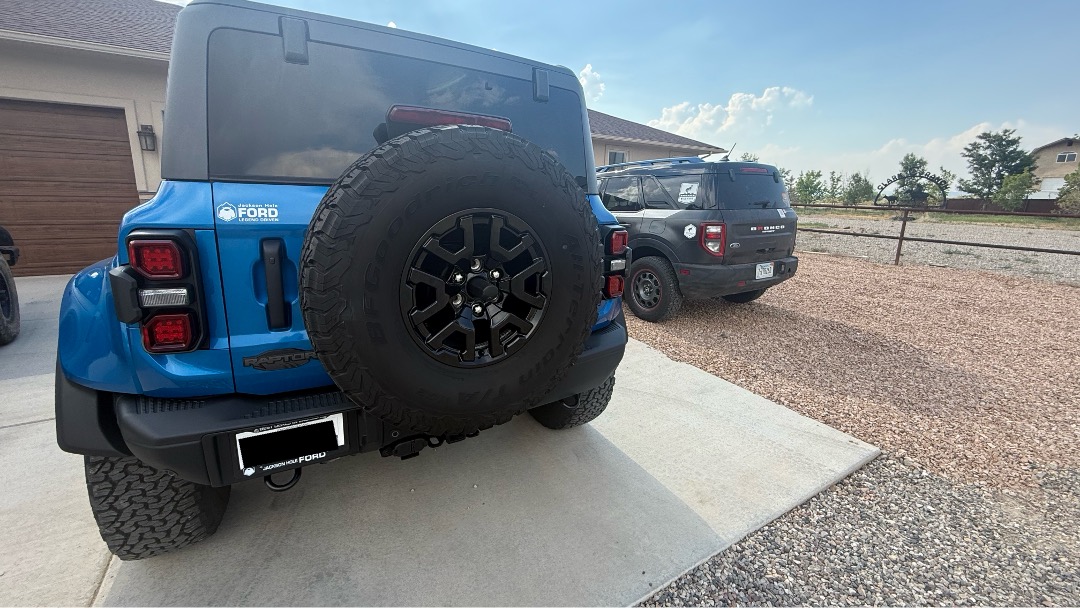
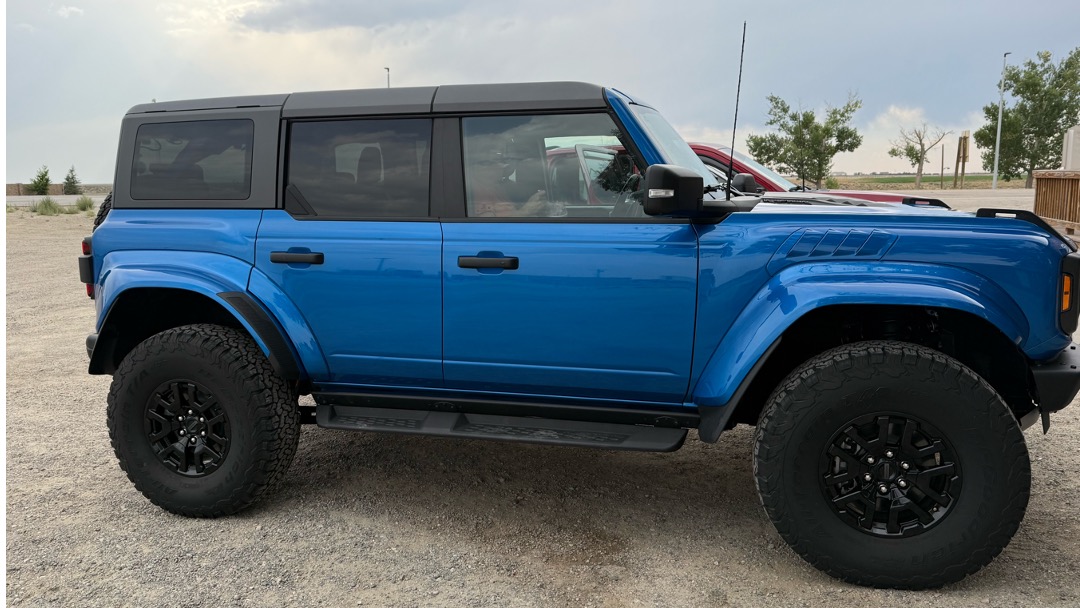
In contrast, the Raptor is wide, really wide. Those fenders and 37-inch tires add serious girth as well as height. In tight switchbacks or narrow canyons, your perspective changes. You now have to account for that extra width and length when navigating obstacles. Learning where each corner of the vehicle sits in relation to rocks, brush, or a curb is a new skillset entirely. A good mental model of your tire placement makes all the difference, especially on technical trails or crowded city parking lots.
Approach Angles: Getting Up and Over
The approach angle refers to how steep an incline your vehicle can hit without the front bumper scraping or digging in. The Bronco Raptor has an aggressive stock approach angle of 47.2 degrees, which means it can clear ledges with not too much effort. The Sport? It’s more conservative, but still respectable at around 30.4 degrees in the Badlands trim; however, everything is relative and the ledge size is to be adjusted accordingly.
No matter which Bronco you're in, the trick is often how you approach an obstacle. Taking it straight on might not work. Altering your angle, coming in diagonally vs. straight on, can help lift one tire over the obstacle first and let the others follow. This improves your odds of clearing the front end, minimizing contact while maximizing traction and clearance.
Ground Clearance and the Breakover Angle
Ground clearance is simply the distance between the underside of your vehicle and the ground. The Bronco Raptor, with its factory 37s, sits high and mighty with a clearance of 13.1 inches. The Bronco Sport Badlands? Around 8.8 inches.
But clearance is dynamic. It’s not just about static numbers, it changes with the terrain. When cresting a hill or rock, you also need to think about the breakover angle, or the angle at which your vehicle can pass over the peak without the belly dragging. The shorter the wheelbase and the higher the center, the better your breakover angle. The Bronco Sport’s modest clearance means you’ll want to take hills slowly and at an angle whenever possible to avoid high-centering.
Another thing to consider? Suspension compression. On the Sport, which has a more traditional crossover suspension setup, ground clearance shrinks when the suspension is compressed under speed. To maintain your maximum clearance on technical terrain, slow it down. The Raptor’s long-travel suspension is designed to soak up fast terrain, but it still compresses. That means clearance isn’t always what the spec sheet says, so no matter the vehicle, pay attention.
Tire Size: Bigger Isn’t Just for Looks
Tires make a huge difference. The 37-inch tires on the Raptor give a full 4 inches more clearance than the Bronco Sport’s stock 29-inch tires. Not only do bigger tires increase clearance under the diffs, but they also roll over obstacles more easily, reduce the impact of ruts, and provide more grip surface.
This doesn’t mean the Sport is incapable, I should know, but it does mean you need to be more selective about your lines and more cautious about what's under you. And if you're transitioning from the Sport to the Raptor, like I am, you’ll notice that things you once avoided, ruts and rocks, now barely register.
Underbody Protection: Skid Plates Matter
Off-road, you’re going to scrape. It’s not a matter of if, but when. The Bronco Sport Badlands does come with some light-duty underbody skid plates, but they’re not bullet proof. In fact, even in the Raptor, best practice is to drive as if you have no skid plates. Even the Titanic was sunk and by paying mechanical sympathy to your vehicles, be they Sport or Raptor, odds are you’ll be less likely to break in the backcountry.
Take the time to spot difficult lines, and don’t rely on the underbody to handle hits.
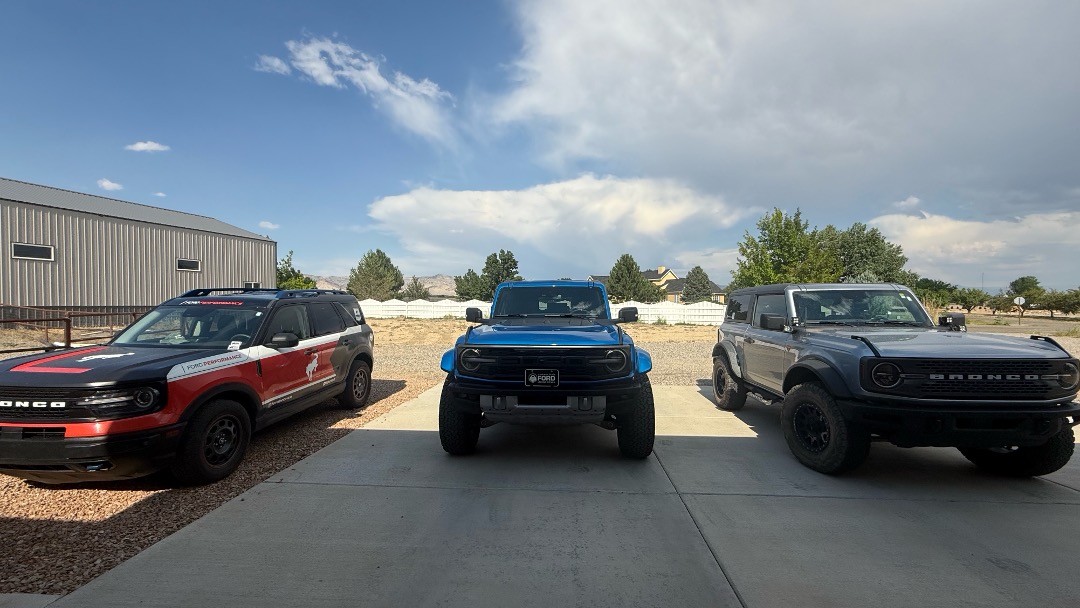
Why Compare These Two Broncos?
Because most off-roaders don’t just stick with one style of adventure. The Bronco Sport Badlands is agile, efficient, and more than capable in the right hands. It gets you into wild places with confidence and comfort. The Bronco Raptor is an entirely different beast, built for speed, crawling, and conquering almost everything in its path. It’s easy to assume that bigger equals better, but in truth, each platform requires different skills, instincts, and awareness.
Now that I’m making the jump between the Sport to the Raptor, I’m not just adjusting my off-road habits, I’m retraining myself to see and feel a much larger, higher, and wider vehicle in motion. Whether I’m negotiating a rocky pass or trying not to take out the shopping cart corral at Target, spatial awareness has never been more important.
So whatever Bronco you're in, take the time to understand its shape, its strengths, and its limits. Off-road mastery starts with knowledge followed by practice.
There are quite a few more considerations I didn’t have the opportunity to list here. Have you driven off-road with different sized vehicles with different clearances and angles? What challenges did you find most difficult to overcome or what tricks and tips have you learned that helps you off-road?
Comments
You must log in or register to post here.